Two Kinds of Keller Homes, Two Different Freeze Weak Points
Winter storm Uri sat over North Texas below freezing for several days in February 2021, well outside what Texas construction was ever built to withstand. In Keller it exposed a split in the housing stock. Older homes in and around the established parts of town tend to have plumbing in exterior walls and crawl-adjacent spaces that predates modern insulation practice. Newer two-story builds in the master-planned sections carry long attic runs feeding upstairs bathrooms. Both froze in 2021, but in different places, which means the right prevention depends on which kind of home you own.
Well Pumps, Pressure Tanks, and Exposed Outdoor Equipment
Keller still has acreage and semi-rural properties on the town's edges, and those homes add a freeze risk suburban houses don't have: a well system. A well pump, the pressure tank, and the exposed supply lines running to and from them are often in an unheated pump house or against an exterior wall, and they freeze fast in a sustained cold snap. If your property runs on a well, that equipment is your first priority, ahead of anything inside the house. Wrap the exposed lines, insulate or heat the pump housing, and keep a trickle moving through the system if you can.
How to Winterize Before a North Texas Hard Freeze
When a freeze watch posts, start outside and work in. Pull every garden hose off its bib and drain it, since a connected hose freezes the spigot from the outside even when the interior line would have held. Sleeve the accessible pipe runs in the attic, garage, and any exterior-wall access points with foam insulation. In an older Keller home, pay special attention to pipes on north-facing exterior walls, which take the brunt of a north wind. Open under-sink cabinet doors on exterior walls so indoor heat reaches the pipe. If you have long attic runs, a single incandescent work light left on overnight often keeps them above freezing.
What to Do When It Drops Into the Teens and Stays There
Insulation handles a normal Texas cold night. It doesn't always handle a multi-day freeze. When the forecast holds in the teens or lower, set the cold-side faucets to a steady drip so water keeps moving through the lines. Locate your main shutoff before you need it, at the meter for a slab home or at the pressure tank for a well system. A faucet that runs dry after you open it is a frozen line. Don't take a torch or heat gun to it. Gentle heat from a hair dryer or warm towels is safe, and a plumber handles the rest.
If a Pipe Bursts: Stop the Water, Then Document
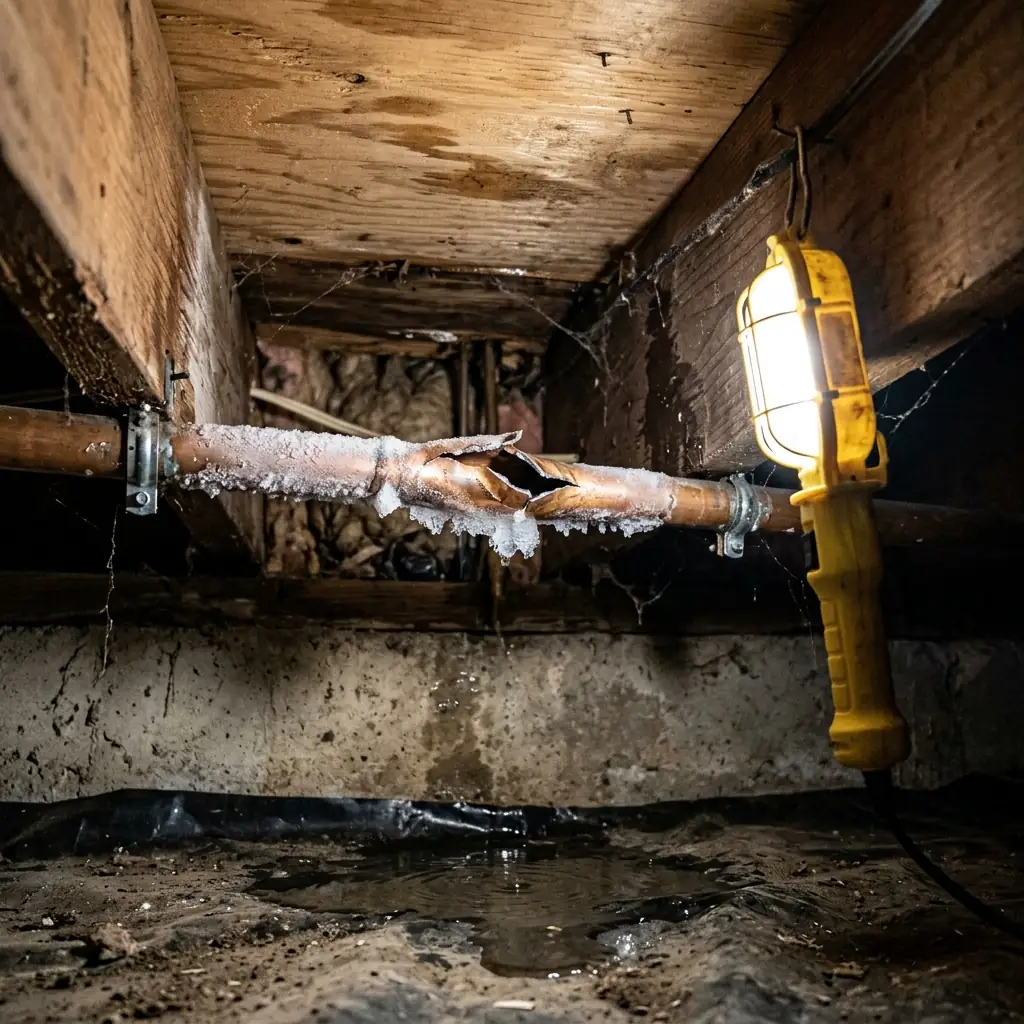
Every minute a burst line runs, the loss grows. Shut off the main first, at the street meter or the well's pressure tank. If water has reached outlets or a panel, cut the breaker for that zone from a dry location before entering. Then document before you clean: photos and video of the waterline, the soaked ceiling or wall, and every damaged item, taken before anything is moved. Leave the mop and shop vac in the closet. They spread water over more area and can't reach the moisture inside wall cavities and framing, which is exactly where mold starts within a day.
Will Texas Homeowners Insurance Pay for It?
A freeze-driven burst is covered under a standard Texas homeowners policy as sudden and accidental damage. The claim turns on proving the freeze caused the failure rather than long-term corrosion, so keep the plumber's written diagnosis and your restoration company's moisture assessment together. One caution for owners of second homes or those who travel: the vacancy clause. If the home was empty with the heat off during the freeze, the insurer can call it negligence and push back on the claim. On a well property, also confirm your policy covers the pump and tank, not just the house plumbing.
Found a burst pipe? Shut off the main first. Then call (817) 761-5827. Our burst pipe water damage team handles emergency extraction, structural drying, and insurance documentation across Keller, including Hidden Lakes and every other neighborhood.