Extraction isn't enough. Moisture in walls, subfloor, and ceilings can grow mold within 24 to 48 hours if not dried properly. Our Dri-Eaz LGR equipment dries Keller homes and businesses to ANSI/IICRC S500-2021 standard, verified.
Live dispatcher answers 24/7. A certified crew gets moving toward your Keller property as soon as one is available.
Dri-Eaz LGR dehumidifiers, Velo PRO air movers, and FLIR thermal imaging on every truck.
Fast extraction and structured drying stop mold before it starts, typically within 24 to 48 hours.
FLIR thermal mapping and moisture meters document every affected zone for your insurance adjuster.
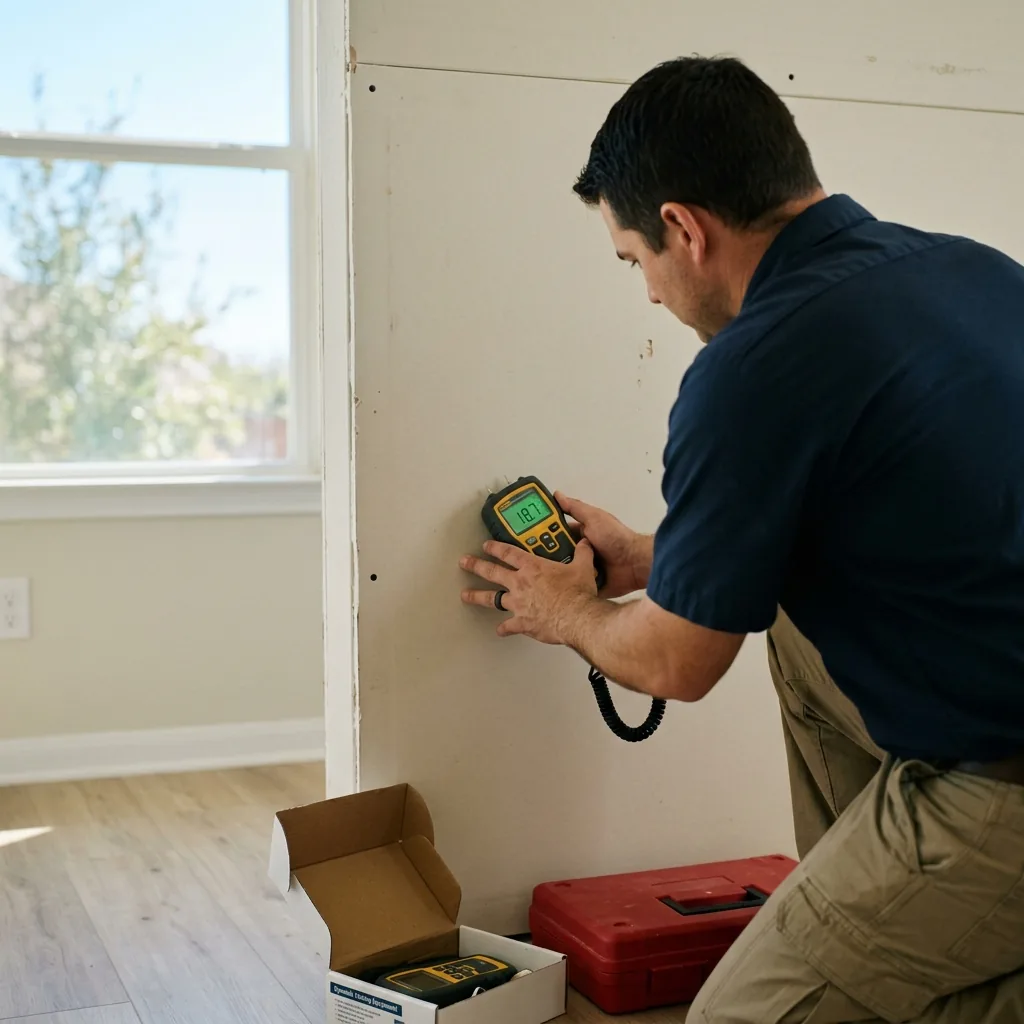
Before equipment is placed, Delmhorst moisture meters and FLIR thermal imaging establish baseline moisture readings for every affected material: drywall, flooring, subfloor, framing, and ceiling assemblies. These readings set the drying goals and track daily progress.
Dri-Eaz Revolution LGR dehumidifiers are positioned to create a controlled drying environment. Velo PRO air movers are placed to maximize airflow across wet surfaces, following the right air movement at the right humidity levels to accelerate evaporation.
We return daily to log moisture readings at every documented point. Progress is tracked against ANSI/IICRC S500-2021 drying goals, with equipment adjusted as conditions change.
Equipment is removed only when all moisture readings have reached ANSI/IICRC S500-2021 drying goals. Final readings are logged and provided with the drying log to your insurance adjuster.
Drying 'until it looks dry' and drying to ANSI/IICRC S500-2021 standard are two different outcomes, and your adjuster knows the difference. North Texas humidity and the area's mix of slab-on-grade and pier-and-beam construction make verified drying non-negotiable, especially after flooding near Big Bear Creek. Dri-Eaz LGR dehumidifiers, daily moisture tracking, and a signed drying log delivered at job close.
The difference between structural drying done correctly and done incorrectly is invisible during the job. It becomes visible later as mold in your walls. We dry to a documented, verifiable standard: daily logs, FLIR verification, and an ANSI/IICRC S500-2021 sign-off, with the same drying record going to you and your insurance adjuster.
Live dispatcher every call, day or night. No voicemail, no answering service.
Vetted local technicians working to the ANSI/IICRC S500 drying standard on every job.
From extraction to mold prevention, one crew handles the full restoration process.
Locally operated in Keller, not a franchise call center. We know every neighborhood.
The moisture source determines the drying strategy, and getting it wrong means mold weeks later. Here are the two structural drying scenarios we handle most.
Problem: After flash flooding near Big Bear Creek or Bear Creek Park, water migrates into wall cavities, under flooring, and behind baseboards. Surface drying with fans and a standard dehumidifier leaves residual moisture in these cavities that can grow mold within days.
Our Solution: FLIR thermal imaging maps all hidden moisture zones. LGR dehumidifiers and air movers placed to address cavity moisture, with daily monitoring confirming drying progress until IICRC S500 goals are met in every zone.
Problem: Slow leaks from a damaged roof membrane or HVAC condensation line build moisture in ceiling and wall assemblies over weeks. By the time visible damage appears, the structural materials may have significant moisture content that requires extended drying.
Our Solution: Thermal imaging establishes the full extent before drying begins. Equipment is configured for ceiling cavity and wall assembly drying, with daily logs documenting progress from start to completion.
Structural drying is the controlled removal of moisture from building materials after water extraction. Without it, residual moisture in wall cavities, subfloor, and ceiling assemblies can grow mold within 24 to 48 hours in Texas humidity. Drying to ANSI/IICRC S500-2021 goals prevents mold and proves the job was done correctly.
Dri-Eaz Revolution LGR dehumidifiers for high-capacity moisture removal, Dri-Eaz Velo PRO air movers for directional airflow, FLIR thermal imaging cameras for hidden moisture mapping, and Delmhorst moisture meters for daily progress tracking until IICRC S500 goals are reached.
Timing depends on the water category, how much area is affected, and whether ceiling or wall cavities are involved. We track daily moisture readings and remove equipment only when the standard is met, rather than guessing on a fixed schedule.
Often yes. FLIR thermal imaging tells us where moisture is in the wall cavity. If readings indicate the moisture is accessible with directed airflow, we use air mover positioning to dry in place. If cavity moisture content is too high, wall openings are made at specific points and sealed after drying.
✓ ANSI/IICRC S500 Drying Standard
✓ OSHA Compliant, Vetted Local Technicians
✓ Locally operated in Keller, not a franchise
Structural drying begins after full water extraction, verified with FLIR thermal imaging before drying equipment is placed.
Structural drying not completed to IICRC S500 goals within 24 to 48 hours leads to mold. Our mold crew handles what drying missed.
Flash-flood water near Big Bear Creek requires full structural drying once extraction is complete.
Skip the form — call Keller Rapid Restoration directly for the fastest response.
Available 24/7 · No-obligation estimate · Fast local response