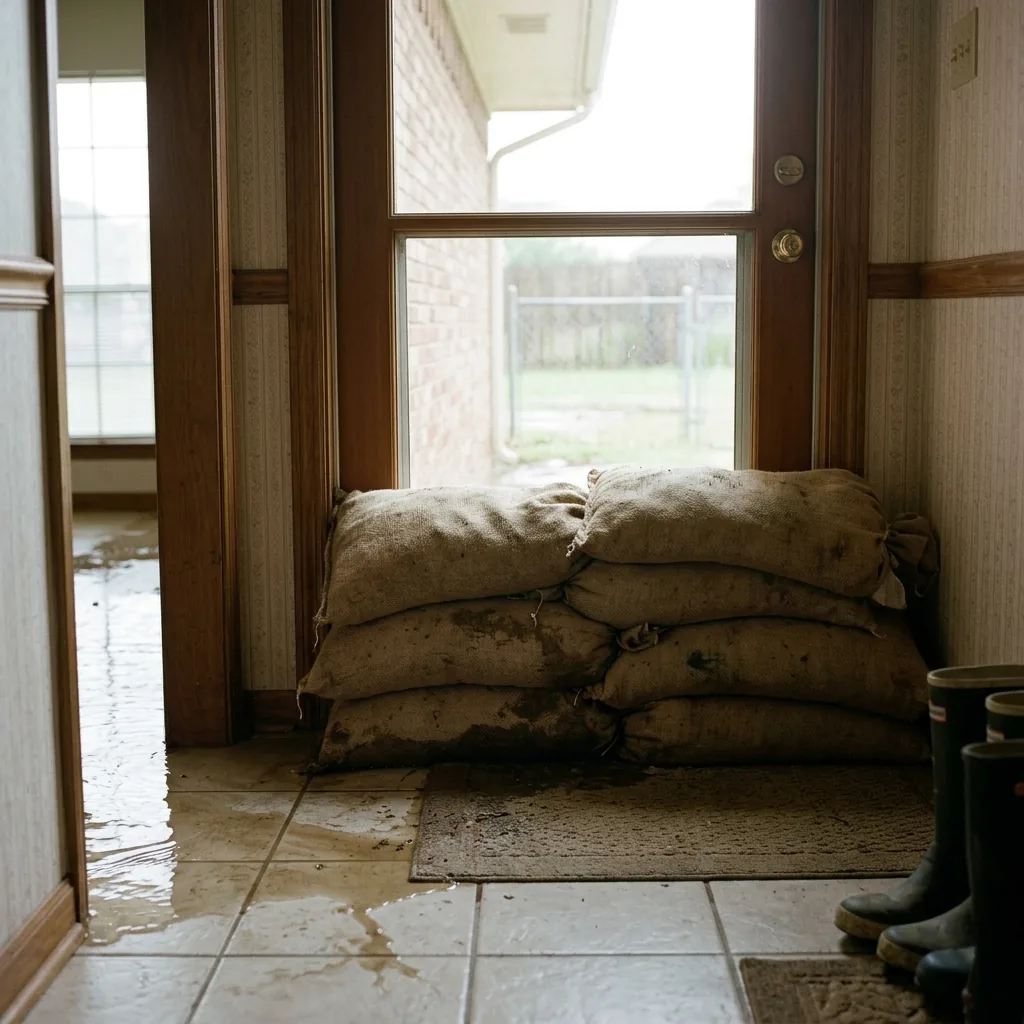
The City of Keller's own flood-awareness page names Big Bear Creek as a flash-flood hazard that can rise to dangerous levels in as little as one hour. When storm water reaches your home or business, our vetted local crew extracts, dries, and documents fast.
Live dispatcher answers 24/7. A certified crew gets moving toward your Keller property as soon as one is available.
Dri-Eaz LGR dehumidifiers, Velo PRO air movers, and FLIR thermal imaging on every truck.
Fast extraction and structured drying stop mold before it starts, typically within 24 to 48 hours.
FLIR thermal mapping and moisture meters document every affected zone for your insurance adjuster.
Our crew arrives and assesses the full scope of flood water intrusion, checking for electrical hazards and contamination level. FLIR thermal imaging maps moisture beyond what's visible at the surface.
Truck-mount extractors remove standing flood water at high volume. Storm water that has crossed yards or streets near Big Bear Creek is treated with appropriate caution for contamination before extraction begins.
Dri-Eaz Revolution LGR dehumidifiers and Velo PRO air movers go to work on walls, flooring, and framing. Daily moisture readings track progress against ANSI/IICRC S500-2021 drying goals.
Complete moisture logs and photos are compiled for your insurance adjuster. Equipment stays in place until every reading confirms the structure has reached a verified dry standard.
Big Bear Creek and the surrounding greenbelt corridor can turn a heavy storm into fast-rising water near homes close to the creek, Bear Creek Park, and the trails that follow it. Flood water often carries contamination that clean water doesn't, so it needs to be treated, extracted, and dried correctly the first time. We handle storm and flash-flood water from arrival through final drying verification.
Flood water near Big Bear Creek behaves differently than a clean supply-line leak, and treating it the same way leaves contamination behind. Our vetted local crew assesses contamination level on arrival, extracts at high volume, and dries to a documented standard with full adjuster paperwork.
Live dispatcher every call, day or night. No voicemail, no answering service.
Vetted local technicians working to the ANSI/IICRC S500 drying standard on every job.
From extraction to mold prevention, one crew handles the full restoration process.
Locally operated in Keller, not a franchise call center. We know every neighborhood.
Flooding in Keller usually traces back to one of two patterns. Both call for fast extraction and verified drying.
Problem: The City of Keller warns that Big Bear Creek can rise to dangerous levels in as little as one hour during heavy rain. Homes and businesses near the creek, Bear Creek Park, and the Big Bear Creek Greenbelt can see water at the door with very little warning.
Our Solution: Crews respond fast with truck-mount extraction and contamination assessment. Drying equipment goes in immediately after extraction, with moisture tracked daily until it meets IICRC S500 goals.
Problem: Older storm drainage near Old Town Keller and other established streets can back up during intense rainfall, pushing water toward foundations and into lower-level spaces before it has anywhere else to go.
Our Solution: On-site assessment identifies the entry point and affected area. Extraction and structural drying proceed with full moisture mapping, and documentation is prepared for your adjuster.
The City of Keller's flood-awareness page states Big Bear Creek can rise to dangerous levels in as little as one hour during heavy storms. That's a short window to move belongings or leave, so knowing your home's flood risk ahead of time matters.
Not always. Flood water that crosses yards, streets, or storm drains can carry contamination that a clean supply-line leak doesn't. We assess the contamination level on arrival and treat the job accordingly, not as a standard clean-water call.
Standard homeowners policies typically exclude rising flood water, which usually requires separate flood insurance through the NFIP. Storm water that enters through a roof or wind-driven opening is often treated differently. We document the entry point for your adjuster either way.
Timing depends on how much area flooded and whether wall cavities or subfloor are affected. We track daily moisture readings and don't remove equipment until every zone reaches a verified IICRC S500 drying standard.
Avoid walking through standing water if there's any electrical risk, and call right away rather than waiting to see if it recedes. The faster extraction starts, the less of your home and belongings get affected by saturation.
✓ ANSI/IICRC S500 Drying Standard
✓ OSHA Compliant, Vetted Local Technicians
✓ Locally operated in Keller, not a franchise
High-volume truck-mount extraction removes flood water before drying begins.
Dri-Eaz LGR dehumidifiers dry walls and flooring to ANSI/IICRC S500-2021 goals after flood water is removed.
Moisture mapping and drying logs your insurance adjuster can use for flood-related claims.
Skip the form — call Keller Rapid Restoration directly for the fastest response.
Available 24/7 · No-obligation estimate · Fast local response