The Damage You Don't See Coming
The water losses that cost Keller homeowners the most are rarely the dramatic ones. A burst pipe or a flooded room gets handled quickly because it's obvious. The slow leak behind a shower wall or under a laundry room is the one that runs for a month, quietly saturating framing and starting mold inside a cavity, until the repair is no longer cosmetic. The good news is that these leaks leave a trail of increasingly loud signals. If you know the sequence, you can step in near the beginning.
The Earliest Whisper: Smell and the Water Bill
The first sign is usually one you smell, not see. A musty odor that settles into one room and stays there after you've changed the HVAC filter is often mold beginning to colonize a damp wall cavity, not a duct issue. The second early signal shows up on paper: a water bill that climbs with no change in how much you use. In the slab-on-grade homes standard across Keller, an under-slab supply-line leak frequently spends weeks as nothing but a higher bill before any moisture reaches the floor. Two quiet signals, both easy to dismiss, both worth acting on.
The Middle Stage: Paint, Stains, and Baseboards
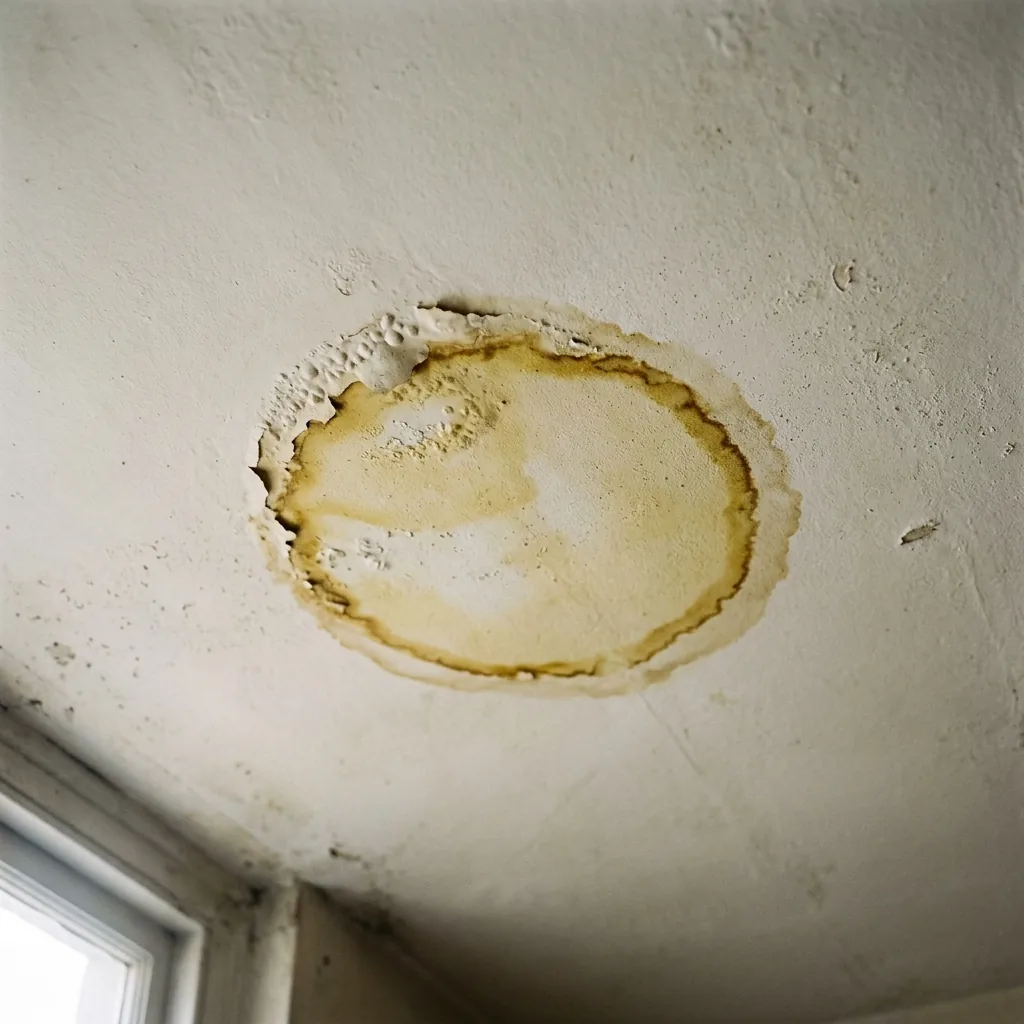
As moisture builds, it starts to mark the surface. Paint or wallpaper that bubbles, peels, or warps is reacting to water behind it, common near windows and on exterior-facing walls. A brown or yellow stain that returns after you paint over it means the source above or behind is still active. And mold creeping along a baseboard or hiding behind furniture on an outside wall points to a chronic, slow source, a fitting that has dripped for months, or summer condensation where an older Keller home's wall runs cold behind thin insulation. These are the middle-stage signs, still ahead of real structural harm but past the point of guessing.
The Late Stage: Soft Drywall and Buckling Floors
By the time the structure itself gives way, the leak has been working a while. Drywall that presses soft or spongy has saturated and lost strength; on a ceiling, that means water is pooling above, often from an attic line or air handler. Hardwood that cups, buckles, or feels spongy underfoot is drawing moisture from below or above, and reading which direction takes meter readings at several points. Our structural drying team maps that migration before placing any equipment, because drying the wrong side does nothing.
Catching It Early in an Older Keller Home
Keller's older homes are where the early signs matter most, since thinner original insulation and decades-old fittings make slow leaks and condensation more likely. Any one signal from the stages above earns a professional moisture assessment. Don't paint over a returning stain or set out a fan and wait; neither reaches water locked inside an assembly. We use FLIR thermal imaging and moisture meters to find the source and full extent without exploratory demolition. Caught early it's a water extraction and drying job; ignored, it becomes a mold remediation job.
Noticing any of these in your Keller home? Call (817) 761-5827. Thermal imaging and moisture mapping find the source and extent before any demolition.