Three Ways Water Gets Into a Keller Home
Almost every water loss in Keller traces back to one of three sources: a storm coming through the roof or across the yard, a freeze bursting a pipe, or a slab leak rising from below. What differs is which one is most likely to hit you, and that depends on your property. Match your prevention effort to your actual exposure rather than spreading it thin across risks you don't really carry, and you get far more protection for the same afternoon of work.
Storm and Roof: The Hail-Country Basics
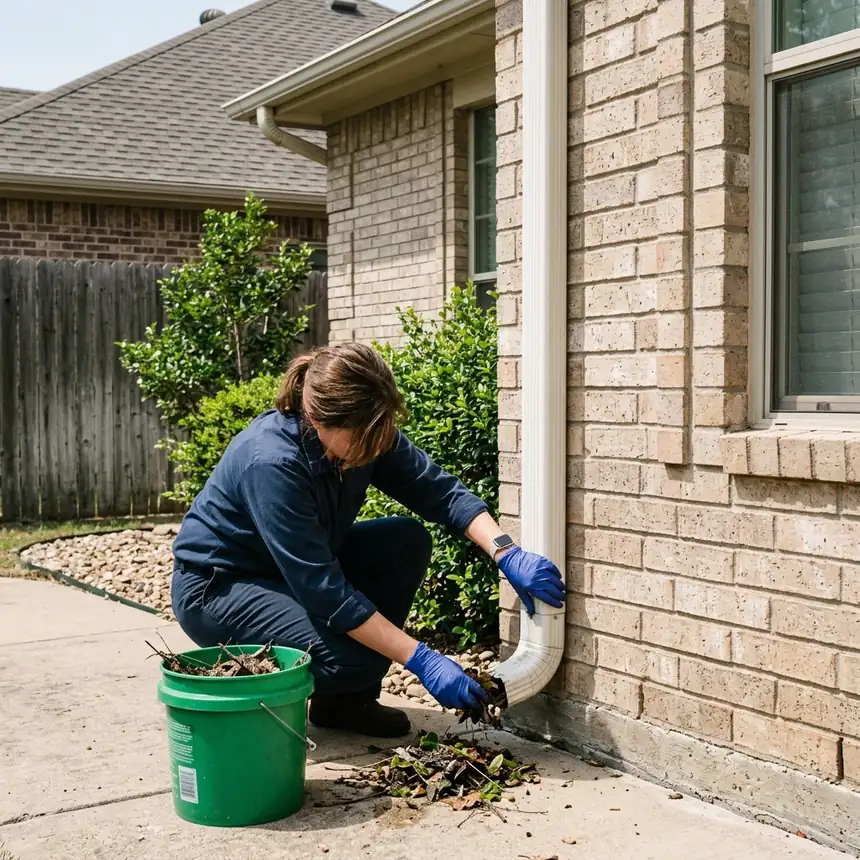
North Texas is hail country, and the roof is your first line. Before spring storm season, check shingles for curling, cracking, or missing sections, and inspect the flashing around chimneys, skylights, and vents, since that's where most roof leaks begin. Clear the gutters so they carry water away instead of overflowing against the foundation. This matters for every Keller home, but especially newer two-story builds, where a small roof breach can travel down through two floors before it surfaces.
Drainage and Big Bear Creek: Know Your Ground
If your lot sits near Big Bear Creek or another low stretch of Keller, drainage is your main event. Walk the yard during a moderate rain and watch where water collects; pooling against the foundation is pressure you don't want, and downspouts should discharge several feet out. Look up your FEMA flood zone so you know whether rising water is a real risk for your address. On Keller's rolling Cross Timbers terrain, a home downhill from its neighbors can take runoff they never see.
Freeze: The One That Catches Well Properties Too
Texas freezes come with a day or two of warning. Ahead of the season, insulate exposed attic pipe runs, the top failure point in most Keller homes. When a freeze watch posts, disconnect hoses, open under-sink cabinets on exterior walls, and drip cold-side faucets overnight. If you're on an acreage property with a well, add one more priority: the well pump, pressure tank, and their exposed lines freeze fast, so insulate or heat that equipment first. Frozen bursts are the bulk of the winter calls our burst pipe water damage team runs.
The Shutoff Everyone Forgets Until It's 2 a.m.
Whatever your property type, one habit protects all of them: know your main shutoff and test it before you need it. For most slab homes that's the valve at the street meter; on a well it's at the pressure tank. Plenty of Keller homeowners discover mid-emergency that the valve is corroded or seized, and by then the water has been running for the minutes that decide the size of the loss. Also do a yearly under-sink check for corrosion at fittings, slow drains, and moisture, the early tells that plumbing is aging out.
Already have water damage in Keller? Call (817) 761-5827 for emergency water damage restoration, 24/7. Prevention is better, but a fast response is what limits the damage, from Hidden Lakes to the rest of Keller.