The Slow Water Damage Nobody Blames on the Weather
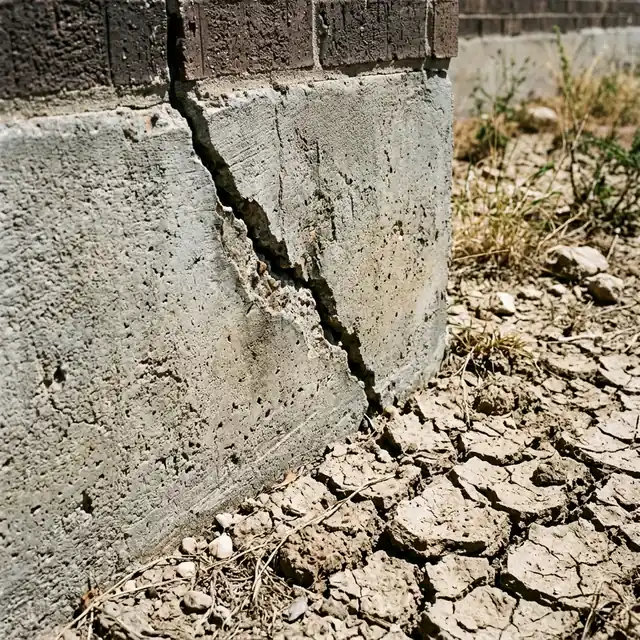
The most persistent water damage in Keller has nothing to do with rain. It comes from the soil, working on your foundation quietly every season, and it surfaces as slab leaks and foundation cracks rather than a flooded floor. Because it never shows up as a storm, it rarely gets blamed on the real cause. Understanding what the ground is doing is how you connect a cracked door frame to a rising water bill.
Keller's Split Ground: Where Cross Timbers Meets Clay
Keller sits in a transition zone. Parts of the area carry the sandy loam of the Eastern Cross Timbers, while others sit on the expansive clay that dominates much of North Texas, and the boundary between them can run right through a neighborhood or a single lot. Expansive clay swells when wet and shrinks when dry, changing volume by inches over a season. Sandy soil stays comparatively stable. When a house spans both, its foundation isn't resting on one consistent material, and that is the root of Keller's particular version of soil-driven damage.
Why Uneven Soil Is Harder on a Foundation Than Uniform Clay
A slab sitting on uniform clay at least moves as one piece; it lifts and settles more or less evenly. A slab bridging clay on one side and sand on the other does not. One end rises and falls with the seasons while the other holds steady, and the foundation has to twist across that line. That differential movement concentrates stress at specific points rather than spreading it out, which is exactly the kind of load that cracks concrete and snaps a pipe joint at one spot instead of wearing evenly over time. It's why a Keller slab leak often traces back to a single stressed run rather than general aging.
The Signs Your Slab Has Moved
The house reports foundation movement before the plumbing does. Look for diagonal cracks at the corners of doors and windows, doors that begin sticking or won't latch, floors that feel sloped, gaps opening where interior walls meet ceiling or floor, and stair-step cracking in exterior brick. In a home spanning mixed soils, these can show up on one side of the house more than the other, a tell that the ground is moving unevenly beneath it.
How Foundation Movement Becomes a Plumbing Leak
When that concentrated stress finally breaks a supply or drain line buried in the slab, water pushes up through the concrete and appears as a warm spot on the floor, a damp area with nothing overhead, or an unexplained jump in the water bill. Since the failure is sealed under the slab, we find it with FLIR thermal imaging instead of cutting exploratory trenches, then our structural drying team dries the slab and affected walls to verified IICRC standards.
Seeing warm or wet floor spots, or a water bill that climbed for no reason? Call (817) 761-5827. We trace under-slab moisture with thermal imaging and document the full scope before any cutting. Our burst pipe water damage service covers slab pipe failures across Keller, including Bourland Oaks and every other neighborhood.