Why the First Day Decides Everything
Water damage isn't a mess you clean up later. It's an active process, and it's already running when you notice it. Water is spreading into materials you can't see, and mold is preparing to colonize anything wet and organic. Nearly every choice that determines your final cost gets made in the first 24 hours, before a restoration crew has even finished. Knowing the sequence, and the traps, is what separates a contained loss from a whole-home project in a Keller home.
Stop the Water, Then Make One Phone Call
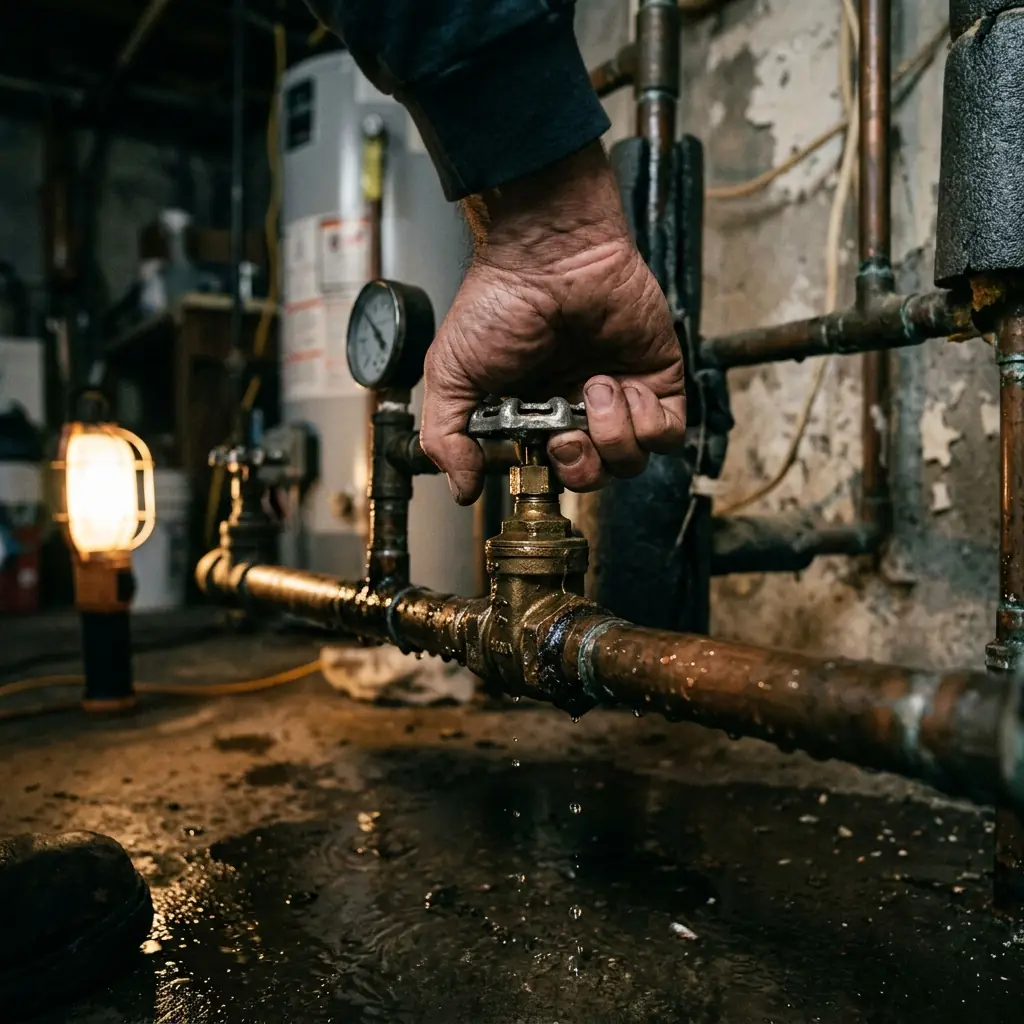
Kill the source first. On a burst supply line that means your main shutoff, at the street meter for most Keller slab homes or at the pressure tank if you're on a well. An appliance failure means shutting that unit off and pulling it from the wall. A roof or storm leak you can't stop, but you can move belongings out of the water's path. Then make one call, to a professional, at (817) 761-5827. Improvising cleanup first usually just spreads the water and costs you time a certified crew would have saved.
The Mistakes That Cost Keller Homeowners the Most
Before the how-to, the don'ts, because these are what turn a manageable loss into an expensive one. Don't lean on household fans as if they replace professional air movers; they push surface air around but never lower the moisture locked inside walls and subfloor. Don't run the HVAC to "dry the house out," since a running system during an active water event can carry mold spores into every room it serves. And don't wait a day or two to see how bad it gets. By hour 24 you already know how bad it is, and you've spent the window that mattered.
What the Water Is Doing Behind the Walls
In the first several hours, water moves far past the visible wet patch. On slab construction it runs under baseboard trim, climbs into the bottom plates of walls, and creeps sideways through fine cracks in the concrete. The damp spot on the floor is usually the small, visible edge of a much larger moisture zone hidden inside the assembly. Finding that hidden spread is why our water extraction team maps every call with FLIR thermal imaging and moisture meters rather than drying only what shows.
Photograph Now, Because the Adjuster Wasn't There
Your adjuster only ever sees the aftermath, so your documentation is the record of what actually happened. Between stopping the water and starting cleanup, photograph and film the source, every affected room, the waterlines, the ruined materials, and any damaged belongings. Keller homeowners who file without that evidence routinely get partial settlements, not because the damage wasn't real but because they couldn't show its original extent. The mold clock, per IICRC S500-2021, is already ticking toward colonization within 24 to 48 hours, so document efficiently and keep moving.
Walking Into the Adjuster Visit Prepared
That first adjuster visit tends to set the scope and value of the whole claim, so don't walk in empty-handed. Bring the time-of-loss photos and video, a written timeline, the moisture assessment report from your restoration company, and an itemized list of damaged property with replacement values. Don't sign off on a reduced scope in the moment, and remember you can request a re-inspection if the first assessment overlooks damage. Preparation is what keeps the claim from being quietly trimmed.
The first hour sets the outcome. Call (817) 761-5827 for emergency water damage restoration anywhere in Keller, including Marshall Ridge and every other neighborhood. Vetted local crew, 24/7.